

 by
by 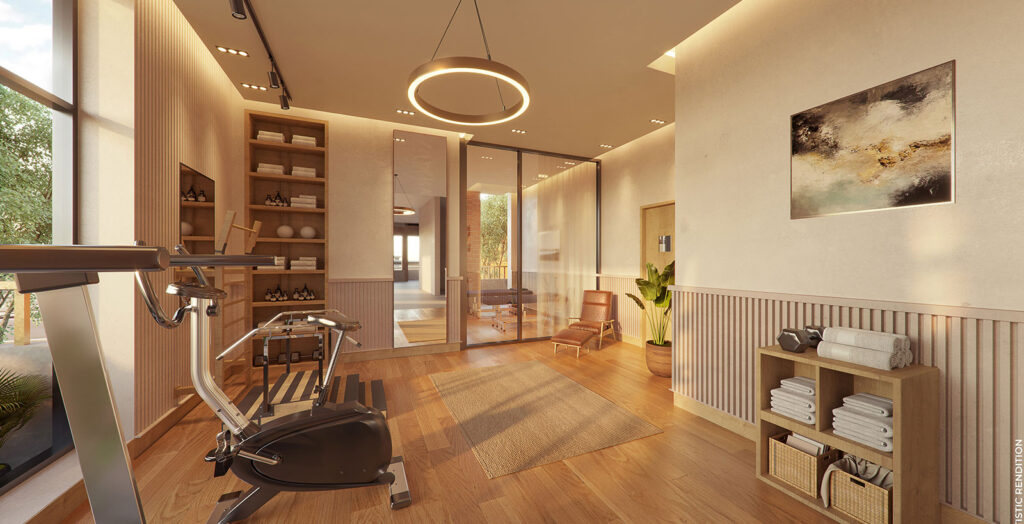
There’s a quiet shift happening in how people think about home.
For a long time, “coming home” meant stopping. Switching off. Collapsing into a couch after a long day and waiting for tomorrow. The home was a pause button — comfortable, yes, but fundamentally passive.
That idea is changing. And it’s changing fast.
Today, the most thoughtful homes being built aren’t designed around stillness. They’re designed around you — your energy, your rhythms, your need to move, rest, connect, and recover. This is what wellness-led living actually means. Not a spa aesthetic or a trendy amenity list. A home that functions as an active participant in how well you live.
Why Movement Became the Missing Ingredient
Here’s the irony of modern convenience: the easier we made everyday life, the worse we felt.
Decades of design optimised for efficiency — everything within reach, every task reduced to fewer steps — quietly made us more sedentary. And we now know what that costs. Chronic stillness is one of the most significant threats to long-term health, linked to everything from cardiovascular disease to depression.
The response from thoughtful architects and developers isn’t to build gyms and call it done. It’s more fundamental than that. It’s about asking: what if the home itself encouraged movement? What if getting up, walking across a room, taking the stairs, or stepping outside felt natural — even appealing — rather than like effort?
That’s the design question driving the next generation of homes.
Light Is Not Just Decoration
Your body runs on a biological clock. That clock runs on sunlight.
When a home is designed with this in mind, the difference is felt immediately. Morning spaces — kitchens, dining areas, breakfast corners — are oriented to catch early light. The kind of cool, bright natural light that tells your brain it’s time to wake up and engage with the day.
By evening, the character of the home shifts. Smart lighting systems ease into warmer, dimmer tones that mirror sunset. This isn’t ambience for its own sake. It’s biology. Warm light in the evening triggers melatonin production, and melatonin is what allows you to fall into genuinely deep sleep — not just sufficient sleep.
Architectural details like sunken courtyards and double-height windows ensure that natural light reaches every corner of the home, not just the rooms facing the right direction. In a wellness-led home, darkness is a design failure.
The Air You Don’t Think About
Clean air is invisible. That’s precisely why it’s so easy to ignore — and why so many homes get it wrong.
Indoor air quality is consistently worse than outdoor air in most urban environments. Off-gassing from synthetic materials, inadequate ventilation, and accumulated allergens create an environment that subtly taxes your body every hour you’re inside.
A home designed for wellness treats air as infrastructure. Cross-ventilation layouts that allow natural airflow through the home. High-grade filtration systems that remove particulates, allergens, and pollutants. Low-VOC paints, adhesives, and finishes that don’t continue releasing chemicals long after the painters have left.
The result isn’t something you can point to. It’s something you feel — or rather, something you stop feeling. The low-grade heaviness that many people carry indoors simply lifts.
Silence Is a Design Material
In cities, silence costs money. But in wellness-led homes, it’s treated as a design material from the very beginning — not an afterthought addressed with a thick rug.
Acoustic planning means choosing materials that absorb rather than reflect sound. It means windows engineered to block traffic noise, not just weather. It means considering how sound travels between rooms, and designing layouts that create genuine quiet zones within a home.
Why does this matter so much? Because noise is a stressor. Not dramatically, not in a way you’d necessarily notice on any given day — but cumulatively, persistently, it keeps the nervous system from fully settling. A home that manages sound well gives you something increasingly rare: the ability to actually exhale.
Spaces That Shift With Your Day
Modern life doesn’t divide neatly into categories. You work, rest, exercise, and connect in overlapping, fluid ways. Your home needs to accommodate that reality rather than fight it.
The home office in a wellness-led home isn’t a converted closet or a corner of the bedroom. It’s a space with real natural light, views of something living — a garden, trees, even a well-placed planter — and enough room to stand, stretch, and move between tasks. The physical environment of where you work directly affects how well you think. This is not opinion. It’s neuroscience.
Bathrooms have quietly become one of the most important rooms in a wellness home. Not because of luxury fittings, though those matter, but because of what they represent: intentional recovery. Steam, warm water, natural stone, and wood textures create a sensory environment that signals the nervous system to release the day. These are not indulgences. They are counterweights to the intensity of modern life.
Fitness in a thoughtful home isn’t relegated to a basement. A dedicated movement space — padded, mirrored, properly lit — makes the decision to exercise easier by removing the friction of going somewhere. Yoga decks, outdoor exercise areas, and community walking trails extend this principle beyond the apartment itself.
What Biophilia Actually Does to the Brain
Biophilic design has become something of a buzzword. But the underlying idea is genuinely important.
Humans evolved over hundreds of thousands of years in natural environments. Our nervous systems are calibrated to respond to certain inputs — running water, wood grain, stone texture, the presence of plants — as signals of safety. When those inputs are present, stress hormones fall. Heart rate slows. The brain shifts out of threat-detection mode.
This is why the materials in a home matter beyond their visual appeal. Rounded forms rather than sharp industrial angles. Natural textures rather than uniform synthetic surfaces. Views of greenery rather than blank walls. These aren’t aesthetic choices. They’re physiological ones.
A home built with biophilic principles doesn’t just look different. It feels different — in ways that compound quietly over months and years.
Wellness Is Also a Community Conversation
Individual health doesn’t happen in isolation. The community surrounding a home shapes wellbeing just as much as the home itself.
Shared spaces designed for casual, unforced interaction reduce loneliness — one of the most significant and underacknowledged health risks of modern urban life. Vehicle-free walkways allow residents to move through their environment without the constant stress of traffic. Community gardens connect people to seasonal rhythms and to each other. Pet-friendly areas and sports spaces provide the kind of low-barrier physical activity that doesn’t require motivation or scheduling.
The best wellness communities don’t feel like wellness communities. They feel like neighbourhoods — alive, varied, and genuinely inhabited.
What This All Points Toward
The home of the next decade will not be defined by size or address or the number of premium finishes in the brochure.
It will be defined by how it makes you feel on an ordinary Tuesday. Whether the air is easy to breathe. Whether the light helps you wake up and wind down naturally. Whether the space around you encourages movement or discourages it. Whether you sleep deeply, think clearly, and feel — without being able to fully explain why — that you are in a place that is working for you.
That is what wellness-led living actually means. Not a design trend. A different set of priorities — one that puts human biology, psychology, and longevity at the centre of every decision.
The home has always been the foundation of a good life. We’re just getting better at building it that way.
Join The Discussion