

 by
by Property transfers within families rarely go as smoothly as people hope. Even with the best intentions, the absence of a clear legal document can turn a straightforward handover into a prolonged dispute. A settlement deed exists precisely to prevent that.
Whether you are a parent looking to pass property to your children during your lifetime, siblings dividing inherited land, or family members resolving a disagreement without going to court — a settlement deed gives the entire process a legally binding foundation.
Here is everything you need to understand before creating one.
What Exactly Is a Settlement Deed?
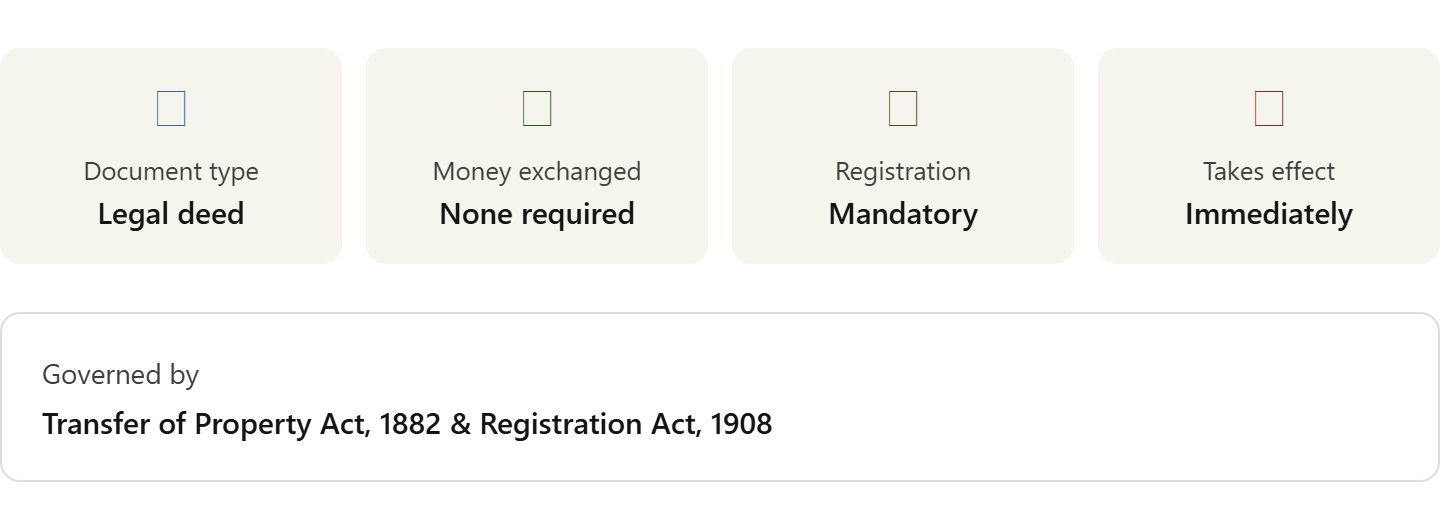
A settlement deed is a formal legal document through which a property owner voluntarily transfers ownership of an asset — almost always immovable property — to one or more individuals. The critical distinction from a regular sale: no money changes hands. The transfer happens out of love, affection, or the practical desire to avoid conflict down the line.
Think of it as the settler — the current owner — making a deliberate, documented decision about where their property goes. And crucially, it takes effect while they are still alive.
When Would You Actually Need One?
- A parent wants to transfer their home to a son or daughter without waiting for a will to kick in
- Brothers and sisters need to divide inherited property without landing in court
- Family members want to settle the estate of someone who passed away without leaving a will
- A property owner wants to preempt future disputes by putting ownership in writing now —
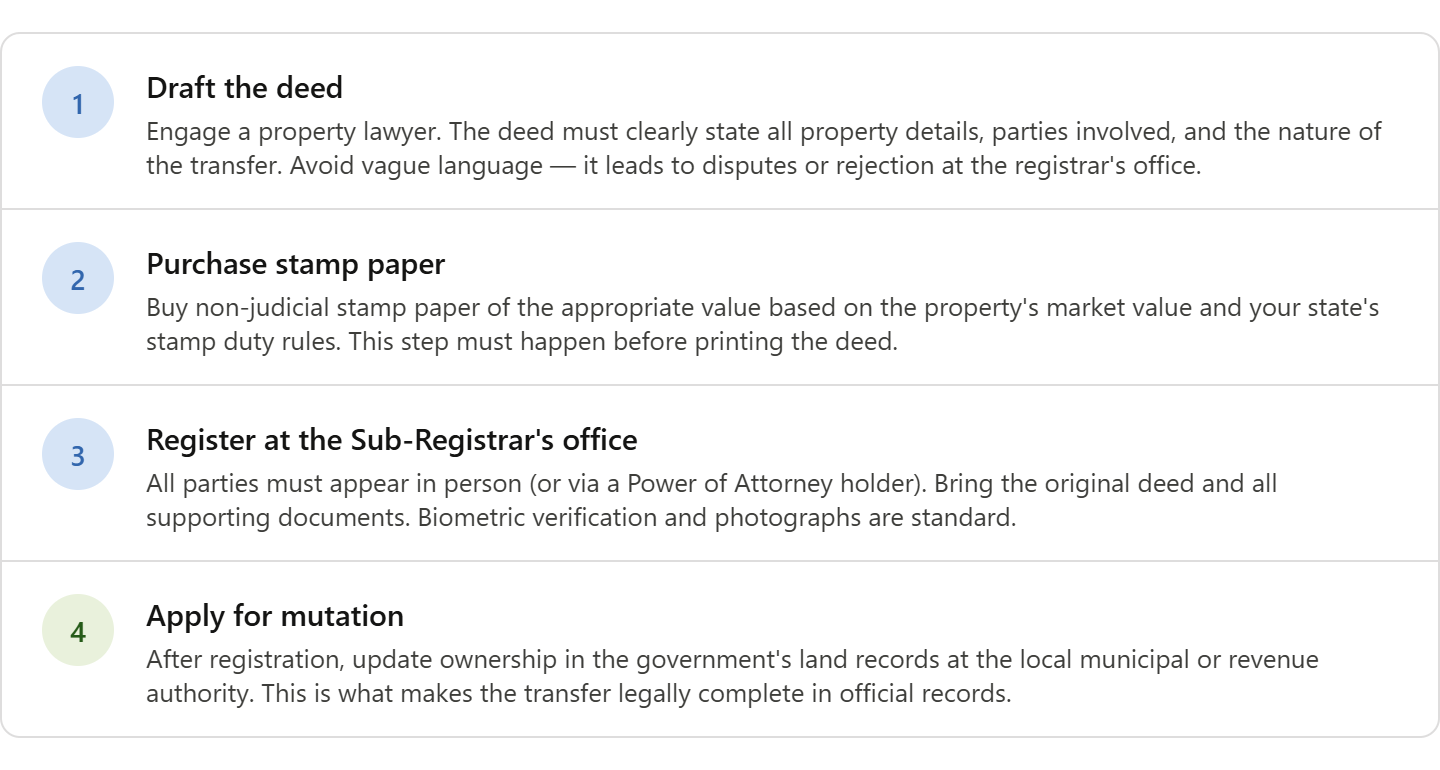
Documents You’ll Need
Turning up at the Sub-Registrar’s office without the right paperwork is one of the most common and avoidable delays. Here’s what to bring:
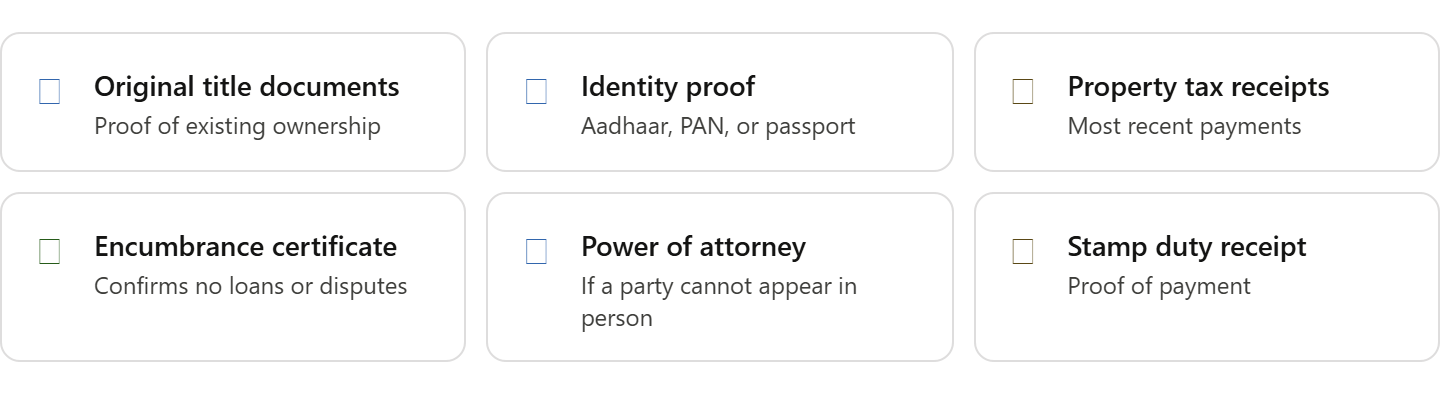
Stamp Duty by State
Stamp duty on settlement deeds varies significantly across India. Transfers between close family members consistently attract lower rates than standard sale deeds — one of the key financial advantages of using this route.
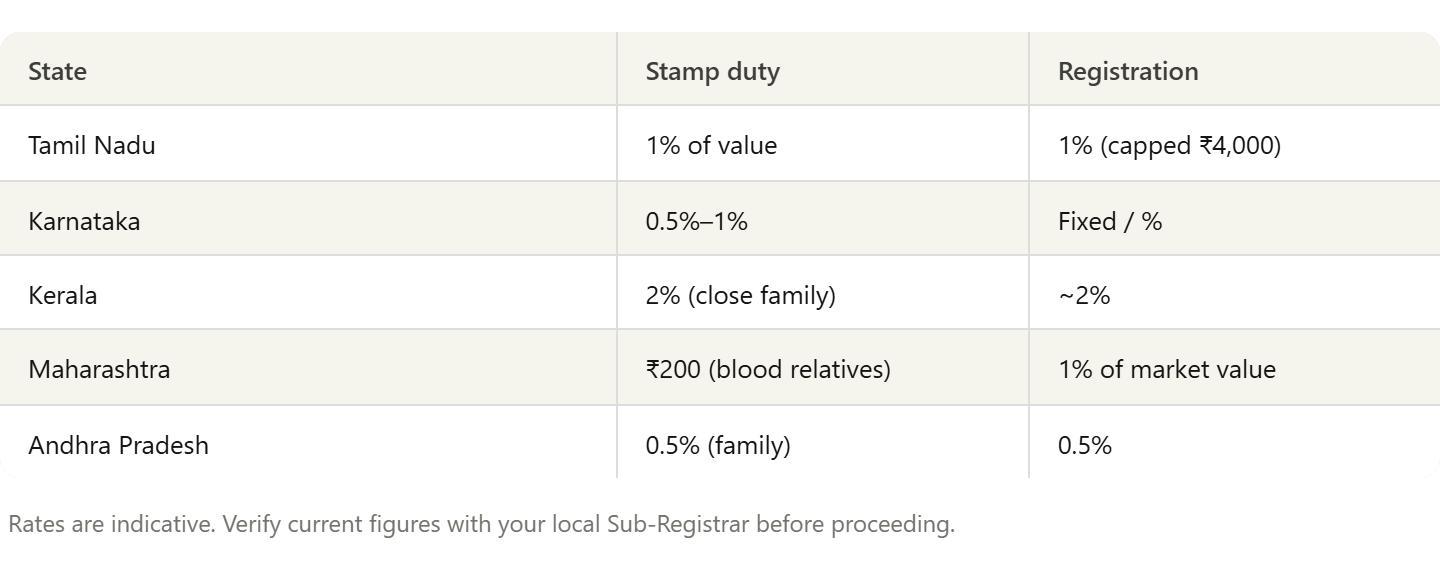
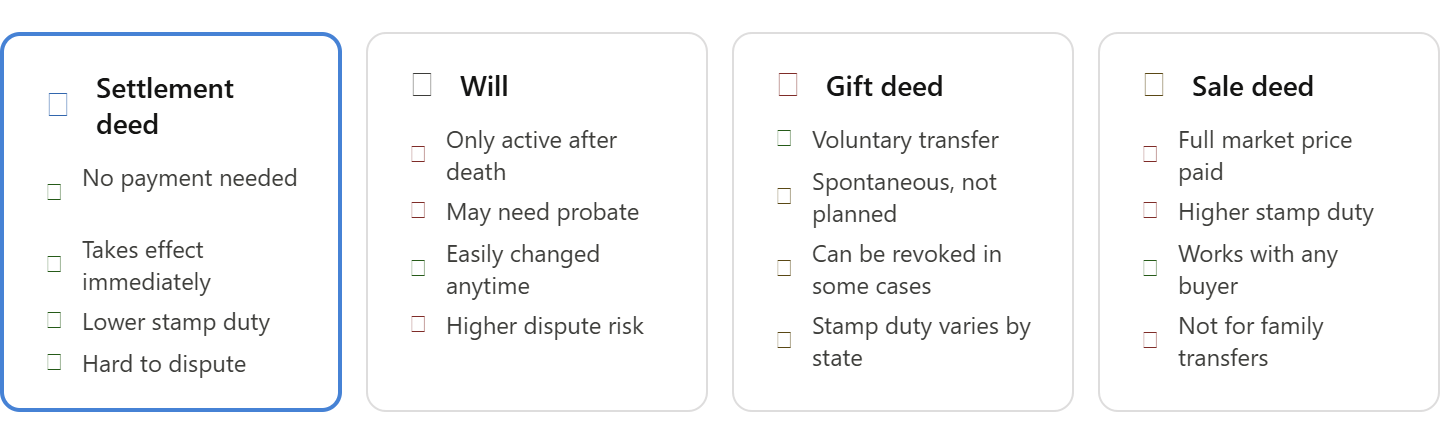
How Does a Settlement Deed Compare to Other Deeds?
This is where most people get confused. Here’s a clear breakdown:
Can a Settlement Deed Be Cancelled?
Once registered and acted upon, cancellation is genuinely difficult. It is possible only in three situations: both parties mutually agree in writing to cancel it, the deed was obtained through fraud or coercion, or a specific revocation clause was written into the original deed.
If the beneficiary has already taken possession or made changes to the property, undoing the deed typically requires court intervention — and courts in India have consistently upheld properly registered settlement deeds as binding and final.
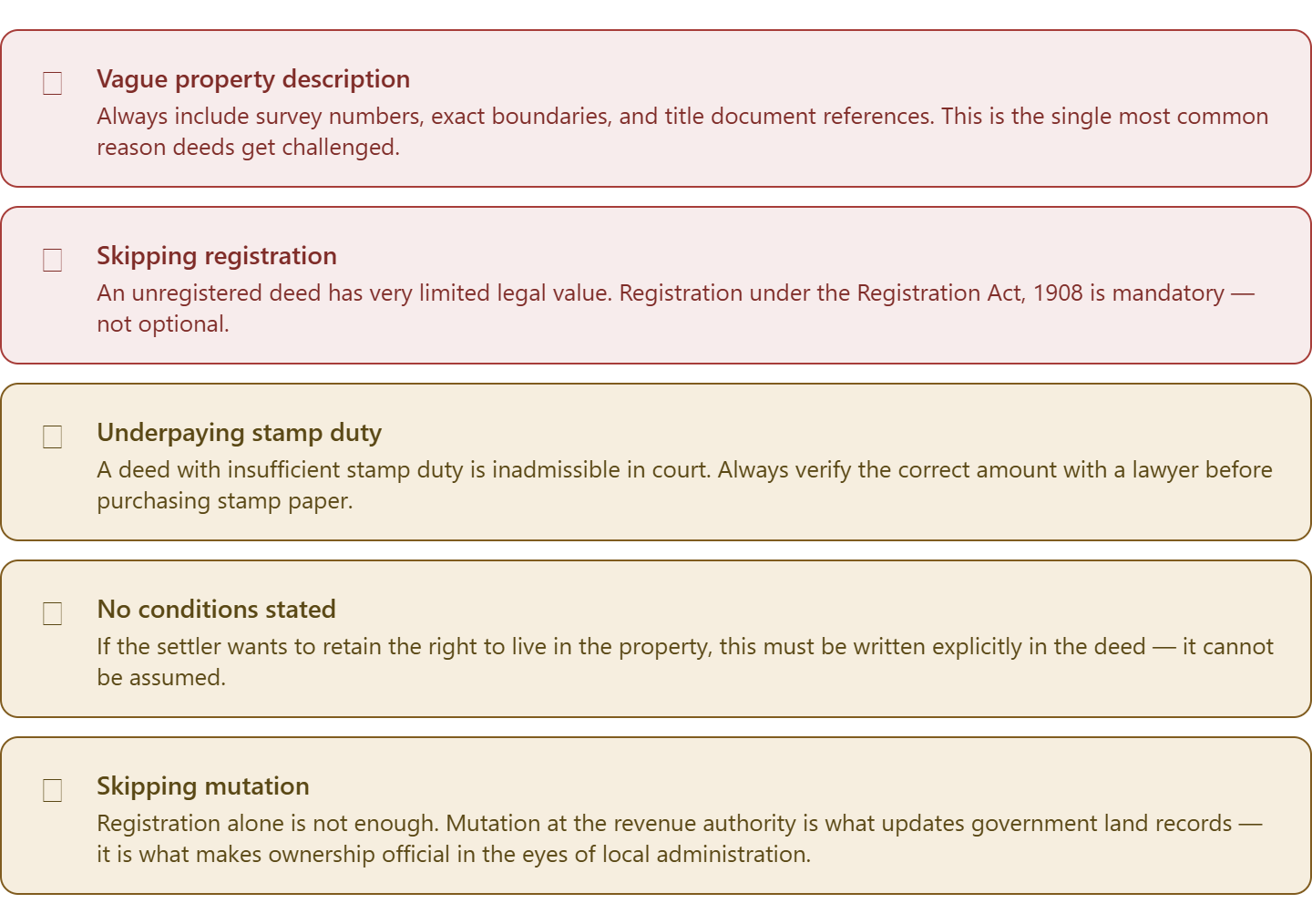
Mistakes That Can Cost You Tax Implications to Know
The tax picture for settlement deeds is relatively favourable, but worth understanding clearly.
Transfers between defined relatives — parents, siblings, spouse, and certain others as specified by the Income Tax Act — are fully exempt from income tax. No gift tax applies either, as India abolished that under the Gift Tax Act.
Capital gains tax does not arise at the time of receiving property through a settlement deed. However, if the beneficiary later decides to sell the property, capital gains will be calculated based on the original cost of acquisition — not the market value at the time of the settlement.
One exception: if the property’s stamp duty value exceeds ₹50,000 and is received from someone outside the defined relatives list, the recipient must treat the excess as income from other sources and pay tax accordingly. This is why the relationship between settler and beneficiary matters beyond just stamp duty.
The Bottom Line
A settlement deed is not just a legal formality. It is one of the most effective tools available to an Indian property owner for passing on assets cleanly, affordably, and without the uncertainty that comes with a will. It takes effect immediately, costs less than a sale deed, and when done right, is extremely difficult to dispute.
The key word is when done right. A settlement deed drafted carelessly — with vague descriptions, missing witnesses, or incorrect stamp duty — can create exactly the kind of conflict it was designed to prevent. Professional legal guidance is not optional here; it is what makes the difference between a document that protects your family and one that burdens them.
Join The Discussion